What is skin?
Skin is your body's largest organ. It keeps water in and germs out, helps control your temperature, and lets you feel touch, heat and pain.
The three layers of skin
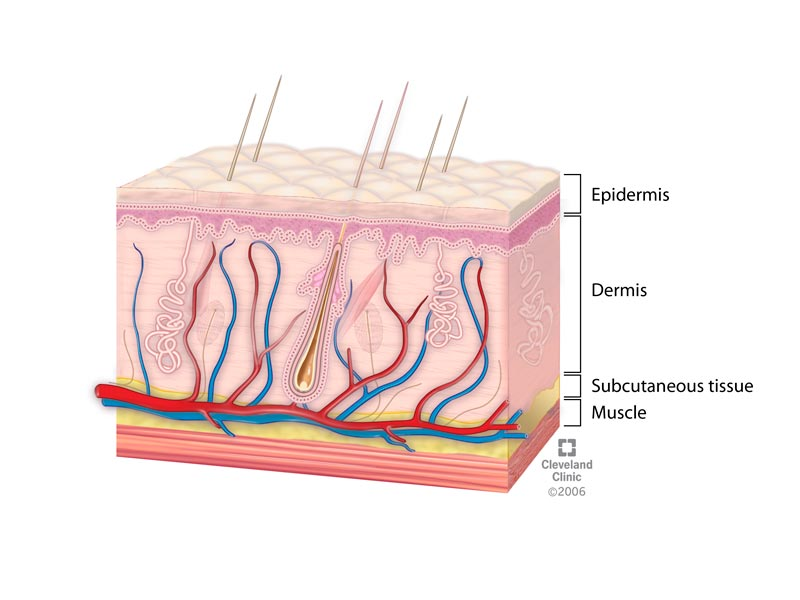
Epidermis
The epidermis is the thin outer layer of skin that we can see. Its outermost cells form a protective barrier that helps keep water in and harmful substances out. New cells form at the bottom and gradually move towards the surface, where they eventually shed.
Dermis
The dermis is the thicker layer below the epidermis. It contains collagen, which gives skin strength, and elastin, which helps it stretch and bounce back. It also contains blood vessels, nerves, hair follicles, sweat glands and oil glands. The oil glands produce sebum, an oil that helps protect the skin.
Hypodermis
The hypodermis sits underneath the dermis and contains mainly fat and connective tissue. It cushions the body, helps keep us warm and stores energy. It also helps connect the skin to the tissues underneath it.
The skin barrier
The skin barrier is the protective outermost part of the epidermis. It is made of skin cells held together by fats, like bricks and cement. It helps keep moisture in and keeps germs out.
What can damage it
- Scrubbing too hard
- Washing too often
- Using too many exfoliants
A damaged barrier can make your skin feel tight, dry, flaky and irritated, even if you have oily skin, and it can make acne worse. Some people also notice their skin looks oilier while it is trying to repair itself.
How to look after it
Cleanse gently and use a moisturizer. Using more products does not mean better skin.
Oil production
Skin oil is called sebum. It comes from sebaceous glands, which are mostly connected to hair follicles in the dermis. During puberty, hormones can make these glands produce more oil.
Oil is normal and useful
Sebum helps keep your skin and hair soft and reduces moisture loss. Oily skin does not mean dirty skin.
When oil causes problems
Extra sebum can mix with dead skin cells and contribute to clogged pores and acne.
Oily skin still needs care
Oily skin can still lack moisture. Trying to scrub away every bit of oil can irritate it.
Puberty and your skin
What changes
During puberty, hormone changes can increase oil production, making clogged pores, blackheads and pimples more common. Sweat glands also become more active, and body hair develops. These changes happen at different times and to different degrees for everyone.
It is normal
Acne does not mean you are dirty or doing something wrong. You do not need perfect skin or a complicated routine.
When to get help
If your acne is painful or leaving scars, talk to a doctor or dermatologist. Getting help is nothing to be embarrassed about.
What's your skin type?
Oily, dry, combination or normal? Answer 5 quick questions to find out which one sounds most like you.